
AI vs Therapist!
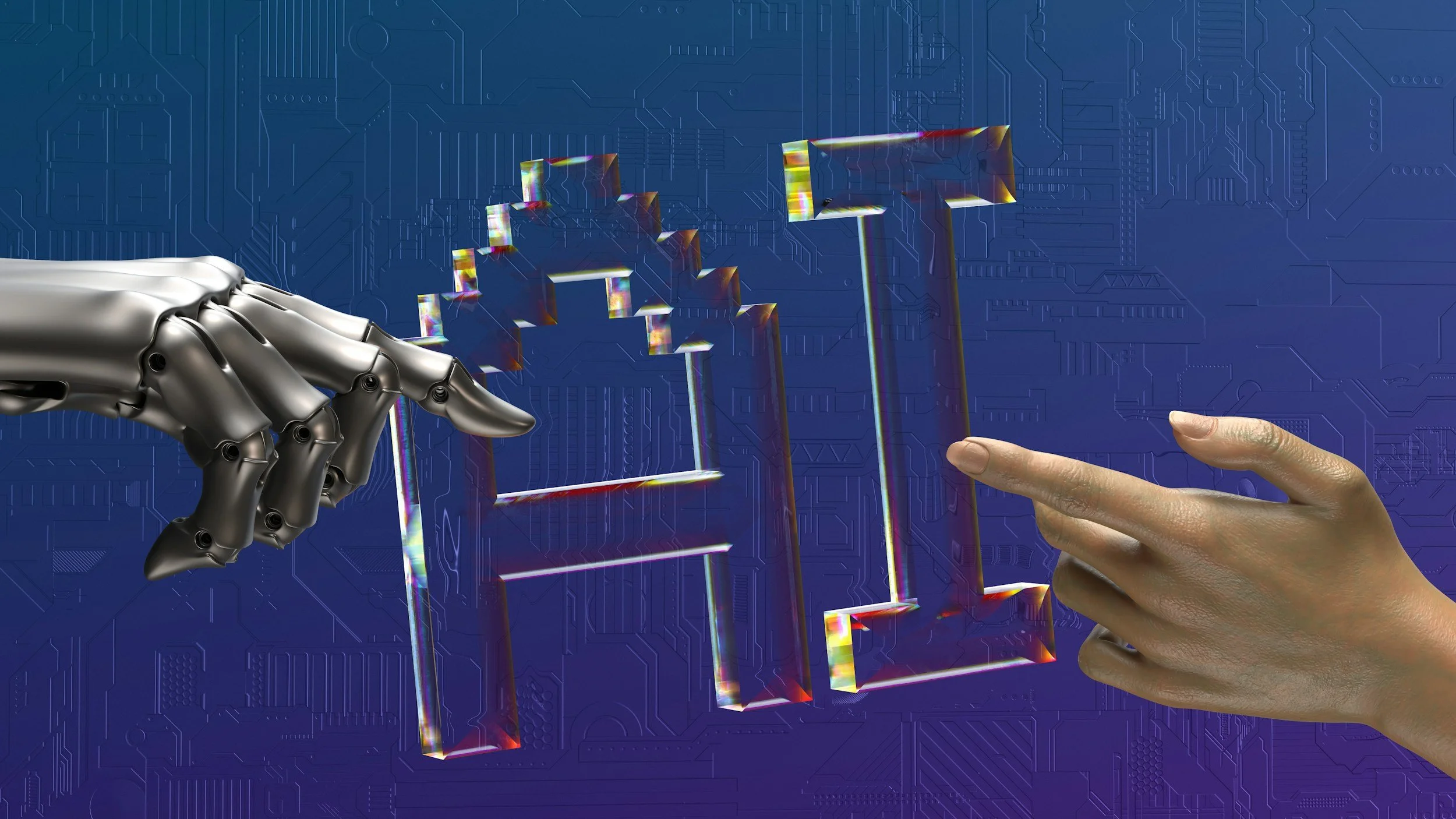
Who will win? AI or Therapist??
There is a lot of talk about town around the growing concerns when it comes to AI. From security risks to accessibility, there always seems to be some moral or ethical dilemma when we image a world with it more integrated into our lives. Especially here in the Bay Area where it seems like AI is just as tied to our identity as E-40 and Karl the Fog are. From tech, to finance, to the mom-and-pop shop in your neighborhood, the question persists: will AI take my job someday?
This has been a topic of interest amongst my colleagues and I over the past few years. What kind of therapist would an AI be if you could prompt it with your deepest, darkest secrets, your past wounds, current interpersonal conflicts, and fears about the future and after all is said, hope that it will give you the answer to all your problems. This might be hyperbole, but this is becoming a growing expectation from artificial intelligence and the LLMs we use in our day to day lives.
To begin, it is important to define some terms to for the sake of shared language and contextual understanding. AI (Artificial Intelligence), will be defined as a computer system or machine that is designed to simulate human intelligence, enabling them to perform complex tasks like learning, reasoning, problem-solving, perception, and language understanding. Therapy will be defined as the professional treatment aimed at addressing emotional and psychological challenges of individuals, couples, and families.
Now the question is, “Will AI ever replace therapists?”, and a follow up question is if AI will not ever replace therapists, “What roll can AI play in therapy?”.
To be transparent, I use AI more than I would like to admit and probably more than I realize. It’s an incredibly powerful tool that saves me a lot of time. And to be honest, there is something kind of nice not having to think original thoughts sometimes. AI has helped give me a fresh perspective on the work I do with clients. Hell, it even helped me study for my licensing exam. (I wouldn’t advise this though as it got many of the practice questions wrong). In 2026, it’s easy to see how useful it can be for therapists and influential to the therapy. But to replace therapist entirely, I find that to be harder to imagine. I say this because I am the holder of a little-known therapy secret that I will share with you.
When it comes to therapeutic outcomes, there is one factor that will likely determine whether you finish of your time in therapy feeling like it was a success or not. It’s not the tips, tricks, or techniques. It’s not the modalities, the room the therapy is happening in, or your zodiac signs. The number one factors that outweighs the rest is the therapeutic relationship. We sometimes refer to this as the therapeutic alliance.
They say the most important decision you will ever make is choosing the person(s) you will be with. The second most important decision you will make is who you choose as your therapist. Therapy involves courage, vulnerability, curious, and compassion. The combination of each of these can lead to trust as is often crucial for any healthy relationship to form. It is once that trust is earned that I find the real work begins in therapy.
It may seem like commonsense, but it is a truth that is elusive. The humanity of the therapeutic process is what is often under appreciated. To have another person, sitting across the screen or office, listening, empathizing, validating, reflecting, encouraging, walking with you through the feelings with unconditional positive regard, that is something that is not easily simulated.
In a digital age, we often confuse virtual interactions to authentic connection. AI can be trained to model the likeness of something that is human but therein lies its deceptiveness. By opening an app on their phone or web browser, one can have immediate access to comforting words and suggestions. But the depth and integration to meaningful change is lacking and leaves querists wondering why things aren’t changing quick enough.
I have seen clients who come to me saying that they were talking to their “AI therapist” about whatever presenting issue they are experiencing and then try to get my input on whether the AI gave good advice or not. Sometimes, part of me feels like it’s a challenge to see who can “out-therapist” the other. (Therapist vs. AI!) At other times, I’m genuinely curious as to what it says. My most frequent questions in those moments are, “Did you try what it suggested?”, and “Was it helpful?”.
While AI can learn the same responses and follow the script, what it can’t do is pick up on the layers of emotions connected to their struggles, the cultural implications this may have on their perspective of suffering and healing, the societal influences that imposes differing values, an awareness of developmental and biological factors, subtle micro expressions resulting from touching on something meaningful, and the very human response where the therapist has their own physical, emotional, and psychological reactions to what is being said in the room. This is what sets AI and therapists apart from each other. It takes one to know one, so to speak.
That is not to say that AI does not or cannot serve a purpose in the therapeutic process. We are already seeing the integration of artificial intelligence in our work as clinicians. Whether it be in helping therapists stay up to date with their documentation and clinical notes, getting clarity on diagnostic criteria, or even helping create treatment plans aligned with client goals. AI is already proving its value for therapists in the modern age.
For the client, using a AI can be an invaluable resource when it comes to psycho-education, helping expand vocabulary on clinical material, and gaining clarity to the approaches being used by the therapist. It can make interesting connections that are easy to miss when thoughts are clouded by emotions or bodily responses. It can also give practical suggestions on tips to reduce anxiety, depression, and stress. Using AI has its merits and shouldn’t be regarded as useless. However, when treating it like a substitute for something that is it not, it can be dangerous, leading to misdiagnosis, inaccurate interventions, and at its worst, cause irreparable harm.
My goal as a licensed therapist is to help my clients be informed of the benefits and risks of using a tool like AI and support them in deciding what is best for them. I encourage curiosity and creativity when it comes to learning new ways that one can improve themselves and I believe that this resource available to us can be used in meaningful and practical ways. While I do not see a world where AI ever replaces therapists, I see it’s inevitable integration into the therapeutic process. It’s our job and privilege to become good stewards of this resource and to use it responsibly.
If you are someone who has similar or different thoughts about the role AI will play in therapy, drop your hot take in the comment section below! I would love to hear from you and keep the conversation going.
P.S. This blog post was written by a human who has a degree in counseling psychology, not creative writing. There may be some grammatical errors somewhere in here. I choose to embrace today’s imperfections. :)